Gurez Valley by Motorcycle: A Complete Guide to Kashmir’s Secret Ride
By
TL;DR Gurez is one of the last genuinely off-radar rides in Kashmir — a high valley near the Line of Control, reached over the 3,300 m Razdan Pass from Bandipora. Indian riders don’t need a formal permit but must deposit a government ID at the Kanzalwan army checkpoint; foreign nationals are currently not permitted to enter because of its LoC proximity. Ride it late June to early September, carry fuel from Bandipora (there’s none in the valley), and stay in Dawar.
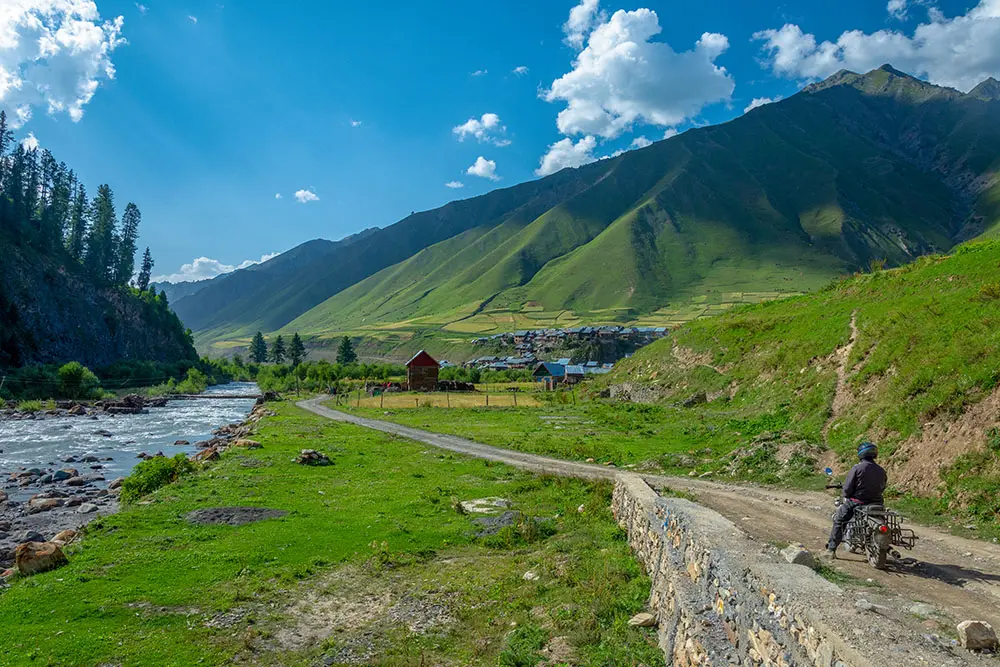
While thousands queue for Ladakh, Gurez sits almost empty — a broad green valley of the Dard-Shin people, ringed by the peaks of Habba Khatoon and the Kishanganga river running toward the Line of Control. It’s exactly the kind of ride that rewards riders who want solitude over selfie-points. Here’s how to do it.
Where is Gurez, and why so few people ride it
Gurez lies in north Kashmir, in Bandipora district, close to the Line of Control with Pakistan. That proximity is precisely why it stayed off-limits to tourists for decades and why it remains gloriously undeveloped today. The valley only opens when the snow clears from Razdan Pass, and its border-sensitive status keeps the rules stricter than elsewhere in Kashmir — which is also what keeps it pristine.
The route: Bandipora to Dawar over Razdan Pass
The ride runs from Srinagar to Bandipora (an easy start on good roads), then climbs the Razdan Pass at around 3,300 m before dropping into the Gurez valley and its main village, Dawar. From Srinagar it’s roughly 120–150 km. The climb to Razdan is steep, narrow and winding, with a mix of broken tarmac and gravel near the top — engaging riding that rewards care rather than speed. In good summer and autumn conditions the road is in fair shape, but it is mountain road, not highway.
Permits and the ID-deposit rule
- Indian nationals: no formal tourist permit is required, but you must deposit a valid government ID (Aadhaar, Voter ID, etc.) at the Kanzalwan army checkpoint on the way in, and collect it on the way out. Carry originals and spare photocopies.
- Foreign nationals: currently not permitted to visit Gurez, due to its proximity to the Line of Control. This can change, so foreign riders should check the latest position before planning — but as of 2026, plan around Indian riders only.
- Rules near the LoC can shift with the security situation; always reconfirm before you ride, and follow all army instructions at checkpoints (photography is restricted in places).
When to ride Gurez
The window is short. Plan for late June to early September, when Razdan Pass is reliably clear of snow and the weather is settled. Outside that window the pass can be blocked, and the valley effectively cut off. Late summer also brings the valley at its greenest.
Fuel — carry it from Bandipora
This is the one that catches riders out: there is no fuel in Gurez Valley. The last reliable petrol pump is in Bandipora. Fill up completely there and, if your tank is small, carry a few litres spare — you have the round trip over Razdan to cover with no refuelling in between.
Where to stay in Dawar
Accommodation is basic but characterful — government-run tourist lodges (JKTDC huts) and a growing number of local homestays. Expect roughly ₹4,000–5,000 a night for a basic room and ₹6,000–8,000 for something better, and don’t expect city comforts — this is the appeal, not a shortcoming. Homestays give you the valley’s real warmth: Dard-Shin food, wood fires and long conversations.
What makes Gurez worth the effort
- Near-total solitude — you’ll share the road with locals and soldiers, not tour buses.
- The Kishanganga (Neelum) river running toward the LoC, and the iconic Habba Khatoon peak above Dawar.
- A living Dard-Shin culture found almost nowhere else.
- Genuine frontier atmosphere — this is as close to riding the edge of the map as Kashmir offers.
Because of the checkpoints, the fuel gap and the short season, Gurez rewards a bit of planning — or a guide who already knows the checkpoint officers and the homestays. It’s the kind of ride we built The Secret Valley of Gurez around precisely because so few operators bother.
Ride Kashmir’s most secret valley with us — permits, fuel and homestays handled
Border-area rules can change at short notice. Reconfirm permit and access status before travelling. Last updated: July 2026.
Frequently Asked Questions
Do I need a permit for Gurez Valley?
Indian nationals don’t need a formal tourist permit, but you must deposit a valid government ID (such as Aadhaar or Voter ID) at the Kanzalwan army checkpoint on the way in and collect it on the way back. Foreign nationals are currently not permitted to visit Gurez because of its proximity to the Line of Control.
Can foreigners visit Gurez Valley?
As of 2026, no — Gurez is currently off-limits to foreign nationals due to its Line of Control proximity. This status can change with the security situation, so foreign riders should check the latest position, but at present Gurez trips are for Indian riders only.
What is the road to Gurez like?
You ride from Srinagar to Bandipora on good roads, then climb the Razdan Pass at around 3,300 m — steep, narrow and winding, with broken tarmac and gravel near the top — before descending to Dawar. It’s roughly 120–150 km from Srinagar. The road is in fair condition in summer and autumn but is mountain road, so ride with care.
When is the best time for a Gurez bike trip?
Late June to early September, when Razdan Pass is clear of snow and the weather is settled. Outside that window the pass can be blocked and the valley cut off. Late summer is also when the valley is at its greenest.
Is there fuel in Gurez Valley?
No. There is no petrol pump in Gurez Valley — the last reliable fuel is at Bandipora. Fill up completely there and carry a little spare, as you’ll cover the round trip over Razdan Pass with no refuelling in between.
Where do you stay in Gurez?
In and around Dawar, the main village, in government-run JKTDC tourist lodges or local homestays. Expect around ₹4,000–5,000 a night for a basic room and ₹6,000–8,000 for a better one. Facilities are basic, but homestays offer an authentic taste of Dard-Shin valley life.