Motorcycle Touring in Rajasthan: Why Winter Is the Season to Ride the Desert
By
TL;DR Rajasthan is a winter riding destination — the opposite of Ladakh. From October to March, days are a pleasant 15–25°C and skies are clear, making it the ideal time to ride the classic Jaipur–Jodhpur–Jaisalmer–Udaipur loop across the Thar Desert. Come summer, the same route bakes at 45°C+. If you want a Himalayan-off-season ride, or you’re a foreign visitor escaping a northern winter, this is India’s answer.
When the Himalayan passes close for winter, India’s riding doesn’t stop — it just moves south to the desert. Rajasthan in winter is one of the most rewarding motorcycle tours in the country: warm forts, cool riding weather, endless well-paved highways and a new palace or dune field at the end of every day. Here’s why the season matters and how to ride it.
Why winter — and only winter
Rajasthan’s climate is the whole story. From October to March the desert days are pleasant — roughly 15–25°C, warm enough to ride in comfort, cool enough not to cook — with clear, sunny skies almost every day and dry, rain-free roads. December and January are the coldest months, with cool mornings and evenings but warm afternoons. In summer, by contrast, the Thar routinely exceeds 45°C, which turns a desert ride into an endurance test. So the riding season is unambiguous: October to March, with the sweet spot around November to February.
| Season | Day temp | Verdict |
| Oct–Mar (winter) | ~15–25°C | Ideal — the riding season |
| Nov–Feb (peak) | ~18–24°C days, cool nights | Best of all — pack layers for mornings |
| Apr–Jun (summer) | 40–45°C+ | Avoid — dangerously hot |
| Jul–Sep (monsoon) | Hot, humid, some rain | Uncomfortable, not recommended |
The classic route: Jaipur → Jodhpur → Jaisalmer → Udaipur
The definitive Rajasthan loop links four of India’s most distinctive cities, and the highways between them are broad and well-paved — relaxed riding that lets you enjoy the landscape rather than fight the road.
- Jaipur — the Pink City; forts (Amber), palaces and the classic Rajasthan opening.
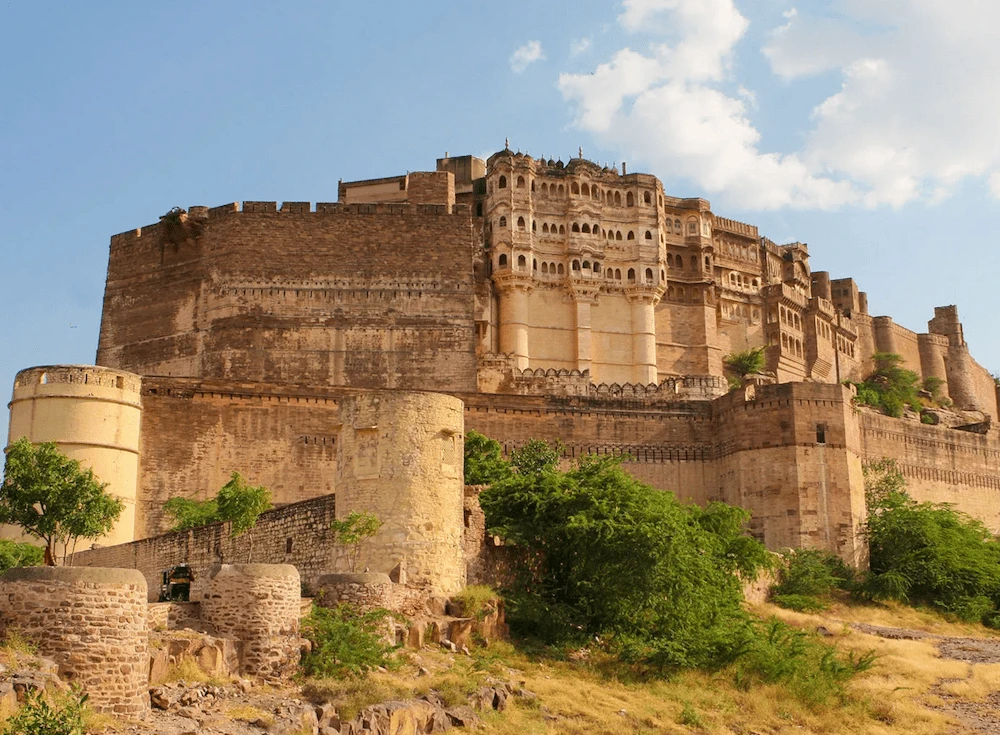
- Jodhpur — the Blue City under the vast Mewar-era Mehrangarh Fort.
- Jaisalmer — the golden desert city, gateway to the Thar dunes and camp-under-the-stars country.
- Udaipur — the City of Lakes; the softer, greener, romantic end to the loop.
Add Pushkar for its lake and temples, and you have the complete circuit. Ten to fourteen days is ideal to ride it comfortably without rushing.
Time it with the Pushkar Camel Fair
If your dates are flexible, aim for the Pushkar Camel Fair — usually October or November. It’s one of the world’s great desert spectacles: thousands of camels, traders, folk musicians and pilgrims filling the dunes around Pushkar. Riding in for the fair turns a good tour into an unforgettable one, and it falls right at the start of the ideal riding season.
What the riding is actually like
This is the antidote to Himalayan riding. No altitude, no oxygen worries, no snow-blocked passes — just long, open desert highways under clear winter sun. Mornings and evenings are cool enough to want a layer; afternoons warm up nicely. The sun is bright and constant, so it’s superb for photography, but pack sunscreen and sunglasses. The main hazards are ordinary Indian-highway ones — livestock, trucks, village crossings — rather than anything technical.
Who Rajasthan winter riding suits
- Riders who want to keep riding through the Himalayan off-season (October–March).
- Foreign visitors escaping a northern-hemisphere winter — the weather is perfect while home is freezing.
- Anyone who prefers culture, forts and comfort over high-altitude endurance.
- First-time India riders who want the country’s colour without the Himalayas’ altitude risk.
It’s the natural counterpoint to our Himalayan expeditions — which is exactly why we run two Rajasthan routes, the palace-focused Royal Rajasthan and the desert-focused Dunes of Rajasthan, timed to the winter season.
Ride the desert this winter — see our Rajasthan routes
Frequently Asked Questions
What is the best time for a Rajasthan motorcycle tour?
October to March, with November to February the peak. Winter days are a pleasant 15–25°C with clear skies and dry roads, ideal for riding the Jaipur–Jodhpur–Jaisalmer–Udaipur loop. Summer (April–June) exceeds 45°C and should be avoided, and the monsoon (July–September) is hot and humid.
Why is Rajasthan a winter riding destination?
Because the desert is only comfortable to ride in the cool months. From October to March, temperatures sit around 15–25°C with clear, dry weather, whereas summer routinely tops 45°C. It’s the mirror image of Ladakh — Rajasthan rides in winter when the Himalayas are closed, and the Himalayas ride in summer when Rajasthan is too hot.
What is the classic Rajasthan bike route?
Jaipur → Jodhpur → Jaisalmer → Udaipur, often with Pushkar added. It links the Pink City, the Blue City, the golden desert city and the City of Lakes over broad, well-paved highways. Ten to fourteen days is ideal to ride it comfortably.
How cold does Rajasthan get in winter for riding?
Days are mild at around 15–25°C, but December and January mornings and evenings get cool — sometimes near single digits in the desert at night. Pack layers you can add in the morning and shed by afternoon. It’s cool, not freezing, and very comfortable to ride in.
Can I ride to the Pushkar Camel Fair?
Yes — and it’s worth planning around. The Pushkar Camel Fair usually falls in October or November, right at the start of the ideal riding season, and adds a spectacular cultural experience to a desert motorcycle tour. Build your dates around it if you can.
Is Rajasthan a good motorcycle trip for beginners or foreign riders?
Yes. With no altitude, good highways and comfortable winter weather, Rajasthan is far more forgiving than a Himalayan trip. It suits first-time India riders and foreign visitors escaping a northern winter, offering the country’s colour and culture without the altitude risk of Ladakh or Spiti.