Why Most Ladakh Bike Trips Disappoint (And What a Premium Tour Actually Looks Like)
By
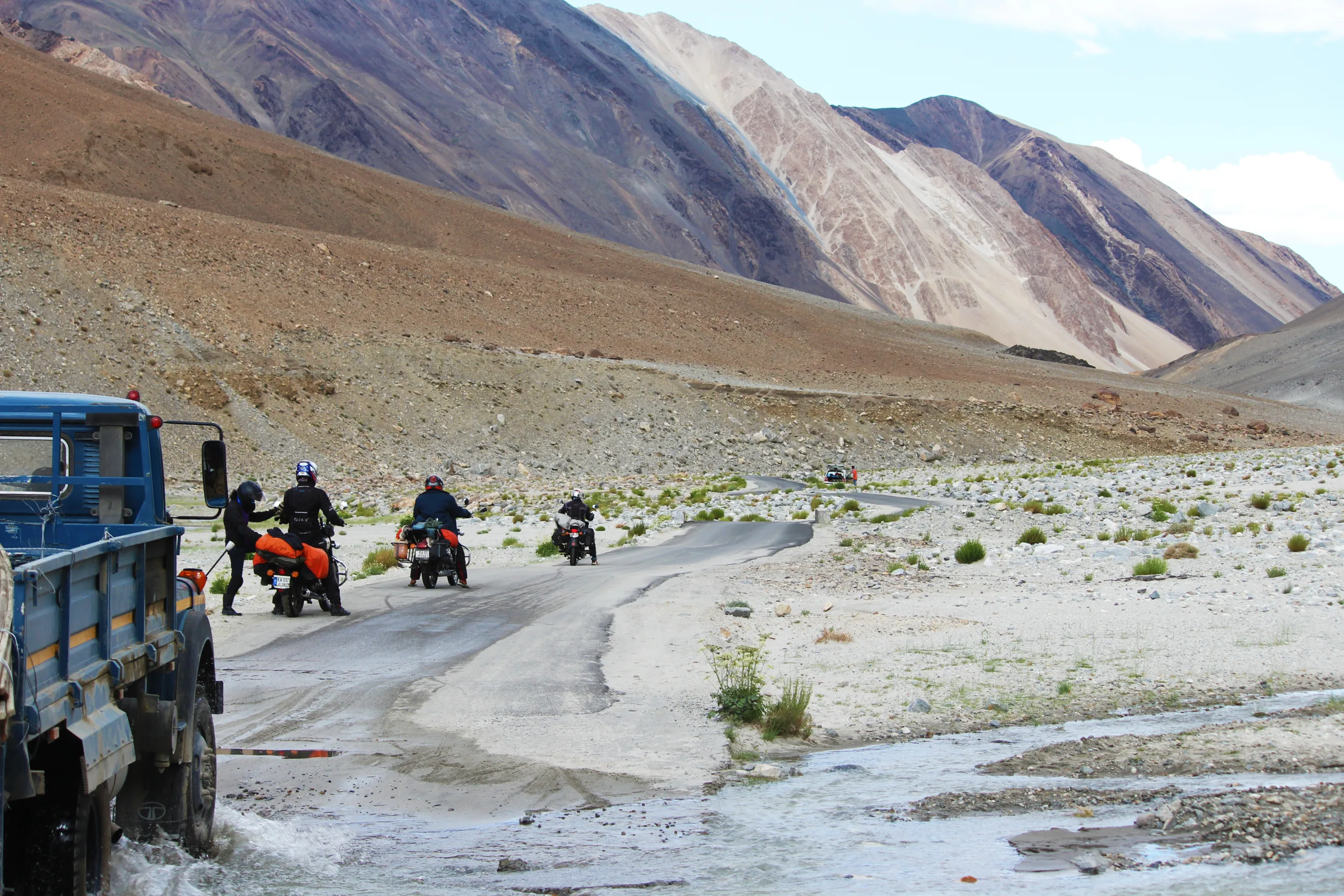
Most riders come back from Ladakh saying one of two things: “best trip of my life” or “never again.”
The same destination. The same months. The same bikes. Why such different outcomes? It isn’t the place. It’s the operation.
TL;DR
- The cheapest tours cut costs in three places that determine whether you have a great trip or a miserable one: group size, support vehicle ratio, and lodging.
- Altitude, weather, and bike trouble in Ladakh aren’t theoretical risks — they happen on every tour.
- A premium tour isn’t about luxury. It’s about what happens when something goes wrong.
The three things that separate a great trip from a bad one
1. Group size
A 25-rider tour is not a tour. It’s a logistics operation where you happen to be one of the cargo items. Hotel check-ins take an hour. Photo stops are chaos. The slowest rider sets the pace, but the fastest rider is bored. Mealtimes are queues.
We cap at 8 riders. Not because 9 doesn’t fit in a hotel — because at 9, the experience changes. One guide can keep eyes on 8 bikes. At 12, you start losing people on the road.
2. Support vehicle ratio
The tour brochure says “support vehicle included.” Read the fine print: how many vehicles for how many riders?
- 1 vehicle for 20+ riders = ornamental
- 1 vehicle for 10 riders = adequate for breakdowns, useless for medical
- 2 vehicles for 8 riders (1 mechanical, 1 medical) = how it should be done
When someone needs evacuation from 4,800m at 11pm — and this happens — the second vehicle is what saves the trip from becoming a story you don’t want to tell.
3. Lodging
“Hotel” in Ladakh ranges from genuine boutique guesthouses with hot water and oxygen access to a tent strung between two trucks. Both call themselves “hotels.”
After a 9-hour ride at altitude, what you sleep on isn’t a luxury question. It’s a recovery question. Bad sleep at altitude compounds — by day four you’re not enjoying anything.
What a premium tour does differently — by the numbers
| Detail | Budget tour | Premium tour |
|---|---|---|
| Group size | 15–30 | Max 8 |
| Support vehicles | 1 (often 0) | 2 (mechanical + medical) |
| Mechanics on tour | 1 shared | 1 dedicated |
| Medical kit | Basic | Full kit + portable oxygen + sat phone |
| Tour leader experience | 1–3 seasons | 8+ seasons, route done 30+ times |
| Daily ride time | 8–10 hours | 5–7 hours |
| Lodging tier | Tents/dorms | Boutique guesthouses + select luxury |
| Guide-to-rider ratio | 1:25+ | 1:4 |
| Acclimatization protocol | “You’ll be fine” | Mandatory rest days, daily SpO2 checks |
| Insurance & evacuation cover | Often none | Mandatory, included |
What this means for your trip
A premium tour isn’t about plush hotel rooms. It’s about the moment your bike’s clutch cable snaps at 4,200m and you don’t have to hitch a ride with strangers, because there’s a mechanic 15 minutes behind you with the spare cable already in his toolkit.
It’s about the moment one rider gets AMS at 11pm and the medical vehicle drives them down 800m of altitude while the rest of the group sleeps — because there’s a second vehicle dedicated to that.
It’s about the moment you pull into a 100-year-old monastery courtyard in Lamayuru, and the abbot opens his door because your guide knows him by name — instead of being one of 30 riders standing outside taking selfies.
That’s the difference. Not the price. The price is just what it costs to operate at that standard.